
During a Japan earthquake or any natural disaster, an eSIM helps you stay online when local networks get congested or damaged, so you can reach loved ones, access alerts, and navigate to safety. Staying connected abroad becomes a lifeline when infrastructure is disrupted, which is why smart travellers prepare their devices before arrival. If you want peace of mind while exploring Japan, planning your digital safety now keeps you ready for unexpected moments.
Learn how eSIMs support travel safety in Japan during earthquakes, helping you stay connected, reach help, and navigate emergencies.
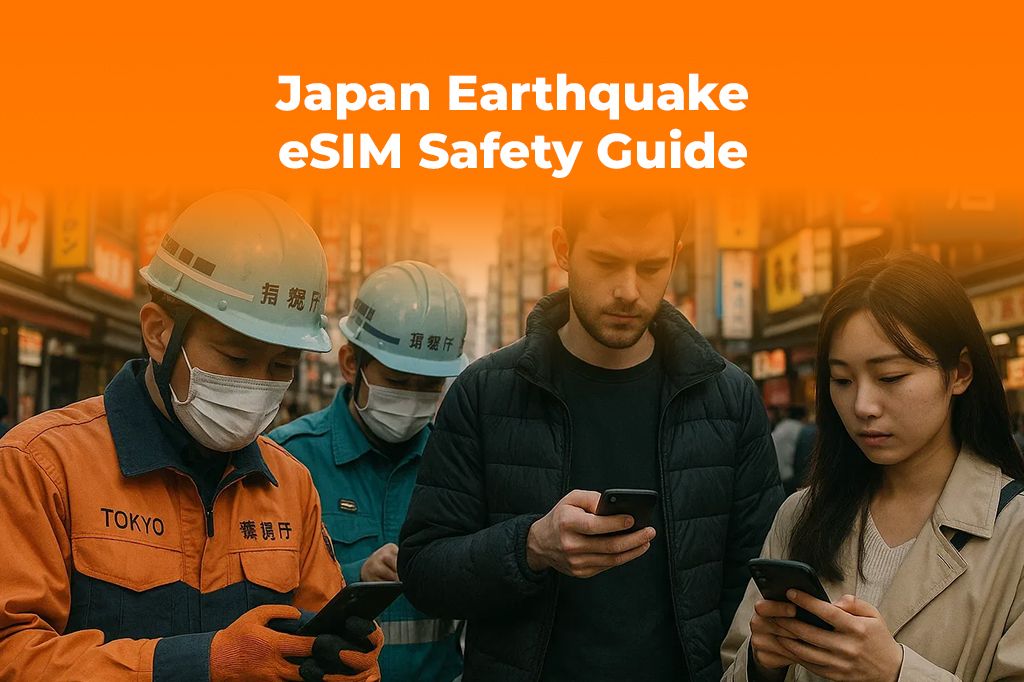
Why connectivity matters during earthquakes in Japan
Japan is one of the most earthquake-prone countries in the world, and travellers often hear about major tremors such as the Tokushima earthquake or aftershocks in regions like Tokyo and Osaka. While Japan maintains strong early-warning systems and fast recovery infrastructure, these events still disrupt networks and public transport. Travel safety in Japan improves significantly when your phone stays online long enough to receive updates, confirm meeting points, or translate emergency instructions.
If you’re new to mobile tech, start with what is an eSIM card. It’s a built-in digital SIM that lets you download mobile profiles without swapping physical cards. This tiny upgrade matters a lot during emergencies because eSIMs reduce activation time, give you flexibility to use backup plans, and make switching networks easy if one provider is overloaded.
A Japan travel connectivity setup that includes an eSIM gives you:
- Faster access to local networks
- Backup data options if roaming fails
- Lower risk of losing service when towers struggle
- Cheaper ways to stay online without international roaming charges
When disaster communication becomes essential, your phone already has a lifeline ready.
How an eSIM keeps you connected during disaster situations
Your emergency eSIM acts as a safety net when primary networks fail. After a Japan earthquake, traffic spikes as millions try to call family or check alerts. Voice networks clog easily, but mobile data channels often recover faster. With a second network profile in your phone, you improve your chance of getting online.
Japan’s government and emergency agencies also push mobile communications for alerts and evacuation maps. You might need translations, notifications, or location sharing with your embassy or travel companions. A spare Japan eSIM profile helps you bypass SIM card stores, which might be closed or overwhelmed during crises.
As a traveller, this redundancy gives you:
- Backup data in case your main plan fails
- Instant connectivity for messaging apps
- Reliable access to maps during evacuations
- Ability to contact family even during network stress
Japan travel connectivity should never depend on a single SIM when you can prepare two digital ones at almost no effort.
Step-by-step: setting up an emergency eSIM before you fly
A little preparation pays off during emergencies. Here’s the most efficient way to set up your eSIM for disaster communication and travel safety in Japan.
-
Choose your Japan eSIM plan
Decide whether you want a local Japan plan or a regional Asia one. If your trip includes South Korea, Taiwan, or Southeast Asia, a broader plan may be smarter.
-
Install before arrival
Buy your plan and scan the QR code while still at home. That way, activation takes seconds instead of depending on airport Wi-Fi.
-
Keep one profile inactive as backup
Your phone can store multiple profiles. Keep at least one emergency eSIM ready but off.
-
Fly with both voice and data options
Use your main SIM or primary eSIM for daily use. If a Japan earthquake disrupts networks, switch to the backup and see which carrier recovers first.
-
Know basic emergency apps
Download offline maps for Japan, save embassy contacts, and install Japan’s J-Alert or translation tools.
Quick reminder
If you want to understand how plans work before your trip, review the setup guide at how Yoho Mobile works. Understanding installation ahead of time ensures your emergency eSIM responds when disaster communication matters most.
Why Japan’s infrastructure still needs backup communication
Japan is technologically advanced, but earthquakes stress even the best networks. Transport halts, crowds form at stations, and information shifts quickly. During the Tokushima earthquake or similar incidents, travellers often rely on mobile messaging rather than calls because voice networks saturate.
This is where an emergency eSIM shines. If you rely only on your home SIM roaming network, you may face:
- High roaming fees
- Slower network access
- Delayed carrier setup
- Limited service priority
A dedicated Japan eSIM optimizes Japan travel connectivity because it anchors directly onto local carriers designed to recover fast. When sirens sound or alerts pop up, you want a channel already tuned to the local system.
Even locals keep multiple network options—Wi-Fi hotspots, mobile batteries, and secondary carriers—because flexibility is a cornerstone of travel safety in Japan.
How Japan uses mobile alerts during disasters
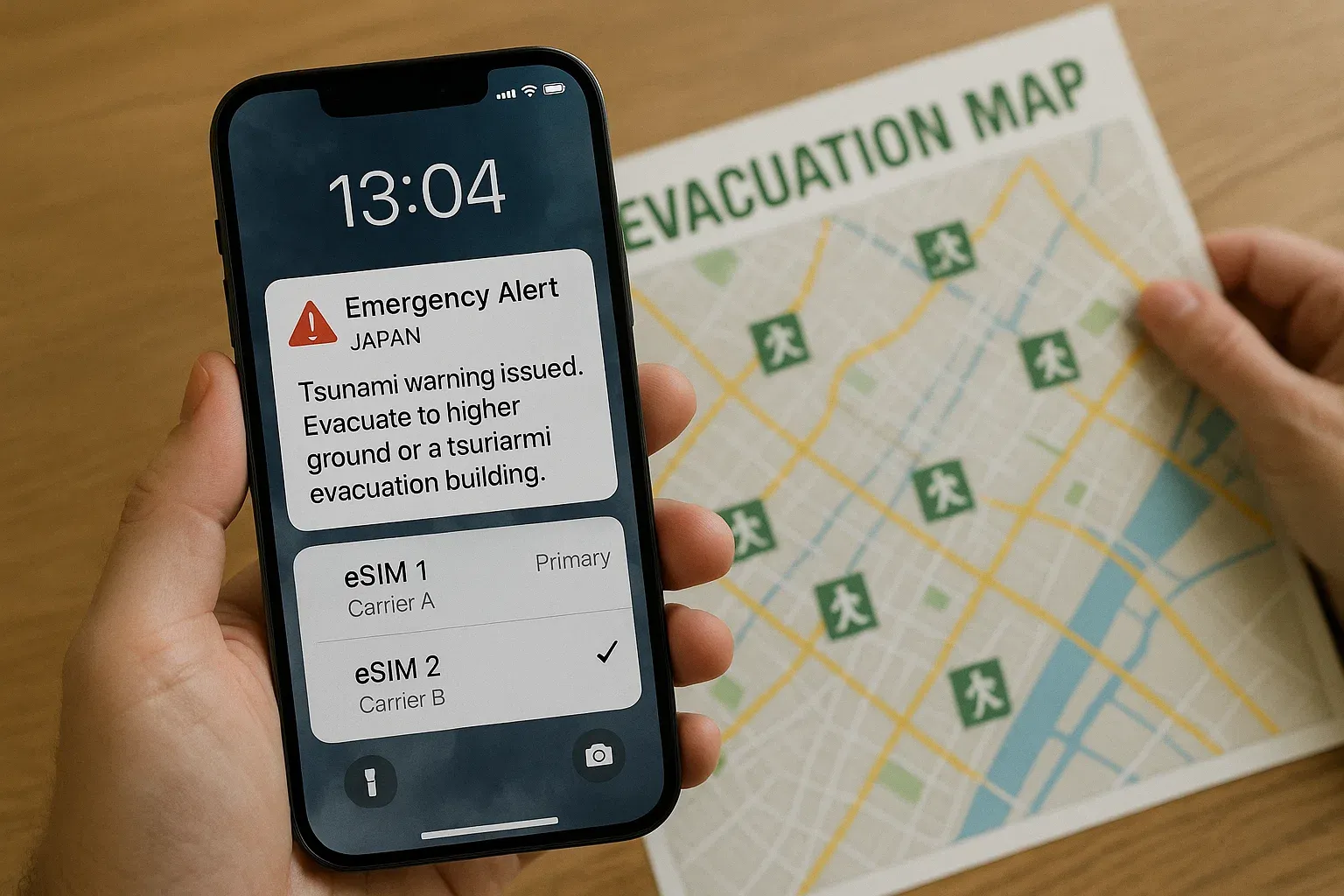
Japan’s alert system sends earthquake warnings, tsunami alerts, evacuation notices, and safety messages straight to phones. These often arrive seconds before shaking begins, giving travellers valuable time to brace or move to safer areas.
But your phone must be connected to receive them. This is why your Japan travel connectivity setup should include:
- Reliable mobile data
- Updated carrier settings
- A functioning eSIM backup
- Translation support for non-Japanese speakers
If your main line drops at the worst moment, switching profiles may allow data to reach you faster. This is not theory—it is common practice for seasoned travellers and residents in seismically active areas.
Real-world scenarios where an eSIM protects you
Imagine landing in Tokyo during peak travel season. You installed your primary eSIM but kept a second inactive. Hours later, a tremor causes transport delays, and everyone rushes onto networks. Your main data slows to a crawl. You activate your backup emergency eSIM and start messaging family and checking updates again.
Or say you planned a visit near Tokushima during a minor quake. Trains stop, and crowds start searching for alternate transport. Your map app continues working because your backup eSIM uses a carrier still online. Instead of wasting time offline, you walk to safe zones and follow government directions.
Travel safety in Japan hinges on redundancy—maps, chargers, alerts, and yes, connectivity layers.
If you want to test how easy it is, you can activate a Yoho Japan eSIM before departure and practice switching profiles so that staying connected abroad feels instinctive.
Key takeaways
- Japan earthquakes disrupt networks, so travellers should prepare digital redundancy.
- An emergency eSIM boosts disaster communication when primary lines clog up.
- Japan travel connectivity improves when you install plans before landing.
- eSIM backups protect you during Tokushima earthquake-style disruptions and beyond.
- Staying connected abroad during crises helps you reach help, navigate, and reassure family.
FAQs
Should I rely on Wi-Fi during emergencies?
Avoid it. Networks get overwhelmed, and power outages can shut hotspots down.
Will alerts still reach my phone if I roam?
Sometimes, but local carriers deliver disaster warnings more reliably.
How do I know which eSIM to activate?
Use your primary first. If speeds drop badly during a Japan earthquake, switch to your emergency eSIM.
Is eSIM secure?
Yes. eSIMs follow encrypted mobile standards like GSMA eSIM standards.
Do I need more than one eSIM?
If emergency readiness matters, two profiles give you resilience and flexibility.
Conclusion
Japan remains safe and resilient, but earthquakes remind travellers to prepare. If you want confidence during crises, you can install a Yoho Japan eSIM now so staying connected abroad remains easy even when the unexpected happens.