
Exchange rates impact your travel budget because your money buys more or less depending on destination currency values, and those shifts influence how much you spend on food, lodging, and mobile data abroad.
When prices change, you adjust your plans for hotels, activities, and connectivity. Ready to protect your wallet? Plan ahead and look into digital data options so you enjoy cheap international roaming without surprises.
Picture by Adam Śmigielski on Unsplash
Why exchange rates matter for travelers
Currency exchange rates change daily and determine how far your money stretches. If your home currency is strong, you enjoy lower daily costs. If it weakens, everything feels expensive. You notice this difference right away when converting cash or paying by card.
A flexible digital travel plan helps you maintain spending control, including how you use mobile networks. Learning what is an eSIM card gives you freedom because you avoid inflated roaming fees set by your home carrier. Instead, you activate local data through your phone and pay fair region-based rates.
Whether you travel to Paris, Bali, or New York, shifts in exchange rates also affect booking apps, taxi fares, and cloud service subscriptions. If your currency falls, connecting via local plans becomes a smart addition to your travel budget strategy. It protects you from unstable fees and hidden roaming charges.
Travel economics: how exchange rate fluctuations shape costs
You might plan a trip months ahead. Exchange rates could change 5–10% between booking flights and landing. That change influences:
- Restaurant spending
- Hotel fees
- Transport services
- Entertainment options
- Data roaming bills
For example, some regions price mobile plans in local currencies. When your home currency weakens, your bill converts higher. That makes cheap international roaming harder to predict. Travelers notice fees climbing even if they didn’t change their behavior.
Using local data profiles reduces conversion risk. You buy connectivity in the destination currency at upfront rates. You pay what locals pay rather than unpredictable carrier markups tied to exchange movements.
Cheap international roaming vs eSIM: why travelers switch
Comparing esim vs roaming highlights why digital travelers prefer eSIM:
- Carrier roaming rates often convert poorly
- Plans include minimum pay cycles or hidden fees
- Data speeds can throttle mid-trip
eSIM delivers transparency. You choose local or regional packages based on your needs. You avoid shock bills when you return home.
Creators, students, and nomads value this predictability. When they adjust their travel budget, they often switch to prepaid regional packages. It allows clearer spending since exchange rate fluctuations don’t multiply roaming fees. Instead, your cost is fixed at purchase.
Step-by-step: how exchange rates influence your data strategy
-
Check regional pricing
See how much data costs in your destination currency. You can do this before you fly to adjust planning. -
Review roaming conversion rates
Home carriers sometimes charge per MB at exchange rates unfavorable to travelers. Compare that with local plans. -
Install your eSIM ahead
This secures fixed prices and avoids conversion markups when you arrive. -
Track your usage
If your currency strengthens, you might extend your plan or upgrade. If it weakens, you preserve data and use Wi-Fi more. -
Set alerts
Use apps to watch exchange shifts so you know when to top up or plan data differently.
Resources such as financial news portals or banking apps help monitor foreign exchange swings. If your budget is tight, prepare before departure by reviewing support pages like how Yoho Mobile works for easy activation guidance.
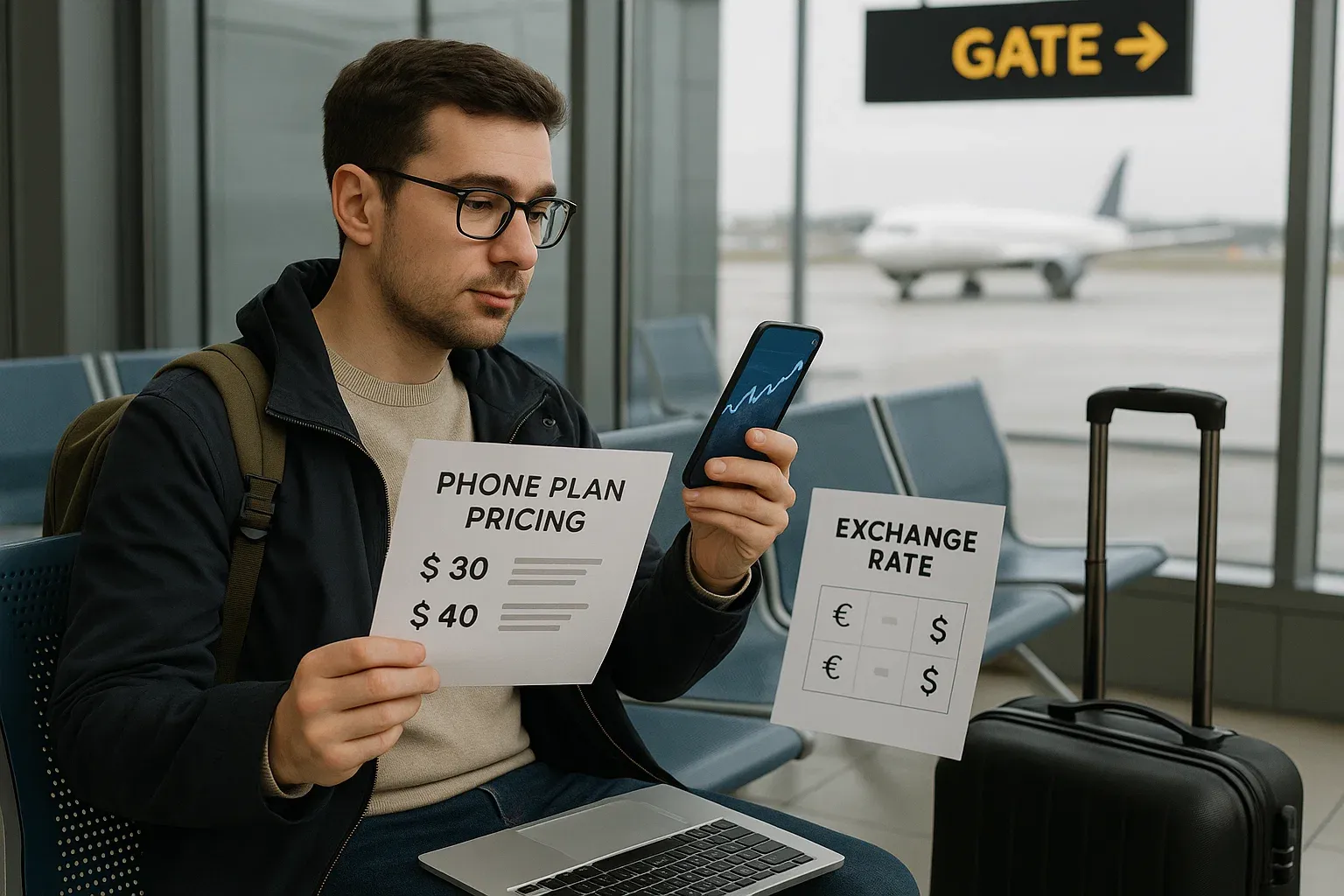
Why your data costs rise or fall abroad
Your provider converts usage charges daily or monthly. If your currency falls, you pay more when the bill arrives. That makes roaming a financial wild card. eSIM plans purchased upfront avoid that variable exchange factor.
Apps you use have currency-based prices too. Cloud storage, editing subscriptions, rideshare costs, and food delivery reflect local currency. You either benefit from favorable rates or need to budget tighter when exchange rates move against you.
Practical examples for travelers
A traveler visiting Japan found their roaming plan nearly doubled because their home currency dropped before billing. Another used eSIM packages purchased in local currency and avoided conversion changes entirely.
A digital nomad in Spain shifted from roaming to eSIM after noticing conversion fees. Their savings grew when exchange rates worsened for their home currency. By locking in prepaid data, cheap international roaming became predictable.
Key lessons for spending smarter abroad
- Track exchange rates
- Compare eSIM pricing before departure
- Avoid per-MB billed roaming plans
- Top up in destination currency for clarity
- Plan based on economic trends
Travelers often stretch their budget further by avoiding conversion fees and uncertainty.
Why eSIM helps protect your travel budget
Because you see the price upfront, you control your spending. You also pick plan durations that match your trip. You pause usage for long flights or stretches when hotel Wi-Fi works. Transparency helps travelers stay in control, especially when exchange rates move unpredictably.
If your trip spans multiple countries, regional bundles stretch your budget. You enjoy fixed data pricing across borders while roaming would change rates per location. Ready to optimize your spending? Choose an eSIM plan through Yoho Mobile so you stay connected without risking expensive currency swings.
FAQs
What affects exchange rates most?
Economic news, inflation, and policy shifts can move markets. Travelers feel those changes through spending power.
Why does roaming cost more during weak currency periods?
Your home provider converts fees from local networks into your currency. Weakness inflates totals.
Are eSIMs cheaper than roaming?
Often yes. eSIMs use local cost structures that stay steady regardless of currency swings.
Can I switch plans mid-trip?
Yes. You upgrade or change data plans through digital dashboards.
Should I wait for rates to improve?
If rates swing heavily, consider smaller top-ups rather than big purchases.
Conclusion
Exchange rate fluctuations shape everything from your travel budget to how much you pay for mobile data abroad. By shifting to prepaid eSIM plans, you gain stability, transparency, and often lower costs while traveling. Enjoy your adventures while staying connected with a smart data strategy powered by Yoho Mobile.